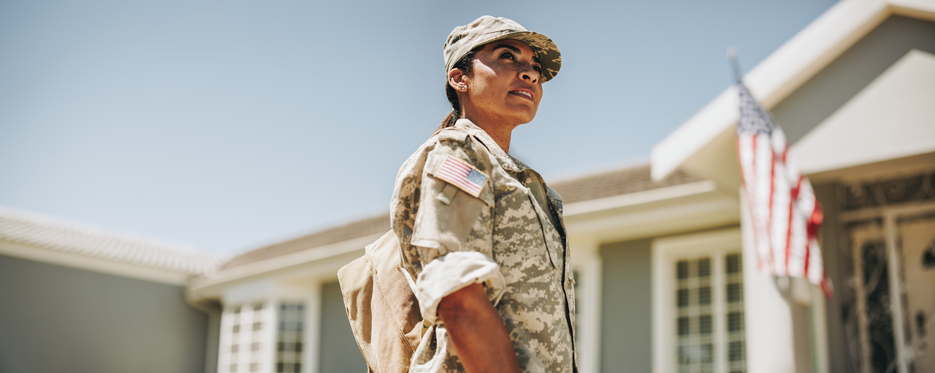
Women’s History Month is a chance to celebrate the many ways women have shaped our country, including through military service. Women veterans have served with skill, courage, and commitment across generations, in every branch, and in roles that have strengthened units, supported missions, and protected communities at home.
And yet, many women veterans still go unrecognized in everyday life. Not because their service is uncommon, but because their stories are not always centered in the way we talk about military service and veteran support.
This month is an opportunity to change that by listening, learning, and making sure women veterans know they are seen, valued, and supported.
One challenge is cultural. Veterans are still commonly framed as male in movies, news, and even public events. That affects how the general public responds to women who served, and it can affect how women veterans describe themselves.
Some women veterans report being treated as if they are not the veteran in the room. They may be assumed to be a spouse, caregiver, or family member. Over time, those experiences can teach someone that it is easier not to bring up their service at all.
Research organizations have also pointed out that women’s military experiences and post-service needs often differ from men’s, and that programs and policies do not always reflect those differences unless there is intentional focus.
Another reason women veterans are overlooked is that support systems are built around the most visible need rather than the full range of needs.
For example, homelessness and housing instability among veterans are often discussed without acknowledging how they can look different for women. Some women avoid shelters because of safety concerns. Some are navigating domestic violence or trauma while also trying to stay employed and keep their children stable. Some are trying to rebuild finances after a disrupted career path.
Mental health can be similar. Women veterans can face trauma that is not always addressed well in generalized settings, especially when the environment does not feel safe or understanding. Veterans Place explicitly recognizes that many women veterans have experienced violence and trauma that can deeply affect mental health and quality of life.
It is also important to note that women are a major part of today’s veteran community, including within the VA health care system. In 2023, about 930,000 women veterans were enrolled in VA health care, and about 650,000 sought VA medical care that year.
Those numbers matter because they are a reminder that women veterans are not a small side story. They are a large group with real needs, spanning housing, employment, physical and mental health, and family stability.
Even when services exist, women veterans may delay reaching out. That can happen for reasons that are easy to miss:
This is where community-based organizations can play a huge role. A welcoming intake process and practical, low-barrier support can be the difference between someone staying stuck and someone starting to stabilize.
Veterans Place of Washington Boulevard is built on a mission to help veterans move from homelessness to home and to support at-risk veterans in building stability and engagement in their communities.
Their programming is especially relevant to the “overlooked” problem because it focuses on immediate needs and long-term stability rather than just short-term fixes.
If you are wondering what “help that meets people where they are” looks like, the Veterans Resource Center is a strong example.
The Veterans Place Veterans Resource Center is 1 of 15 in the country and the only VA-funded Resource Center in Western PA. Services include transportation support, food, clothing, laundry, showers, financial assistance, individualized case management, and quick connection to housing resources.
A detail that matters for women veterans who feel unsure about asking for help: Anyone who served even one day in uniform is welcome, regardless of discharge status.
Housing instability is not one single situation, so a single housing model rarely works for everyone.
Veterans Place offers transitional housing options for both men and women, including:
These kinds of options can be especially important for women veterans who may be balancing safety, recovery, employment, and family needs all at once.
Being overlooked is not only about visibility. It can also be about how quickly a person can rebuild stability. Employment is a major part of that.
Veterans Place provides employment services, including a Post-9/11 employment program that supports veterans with resume building, training, and competitive employment, regardless of discharge status.
For low-income veterans and families, Veterans Place believes that job placement success is supported by help with basic needs and job-related essentials, such as tools, transportation, or insurance.
If you want to support women veterans in a meaningful way this month, here are a few steps you can take:
Women veterans should not have to work twice as hard to be seen. Awareness matters, but access matters more. When women veterans can quickly connect to housing support, employment help, and a community that understands their experiences, being overlooked becomes less common, and recovery becomes more achievable.
If you are a woman veteran in the Pittsburgh region who needs support, or you know someone who does, Veterans Place is one local organization offering a clear path to resources, stability, and community. Contact us today to learn more!